
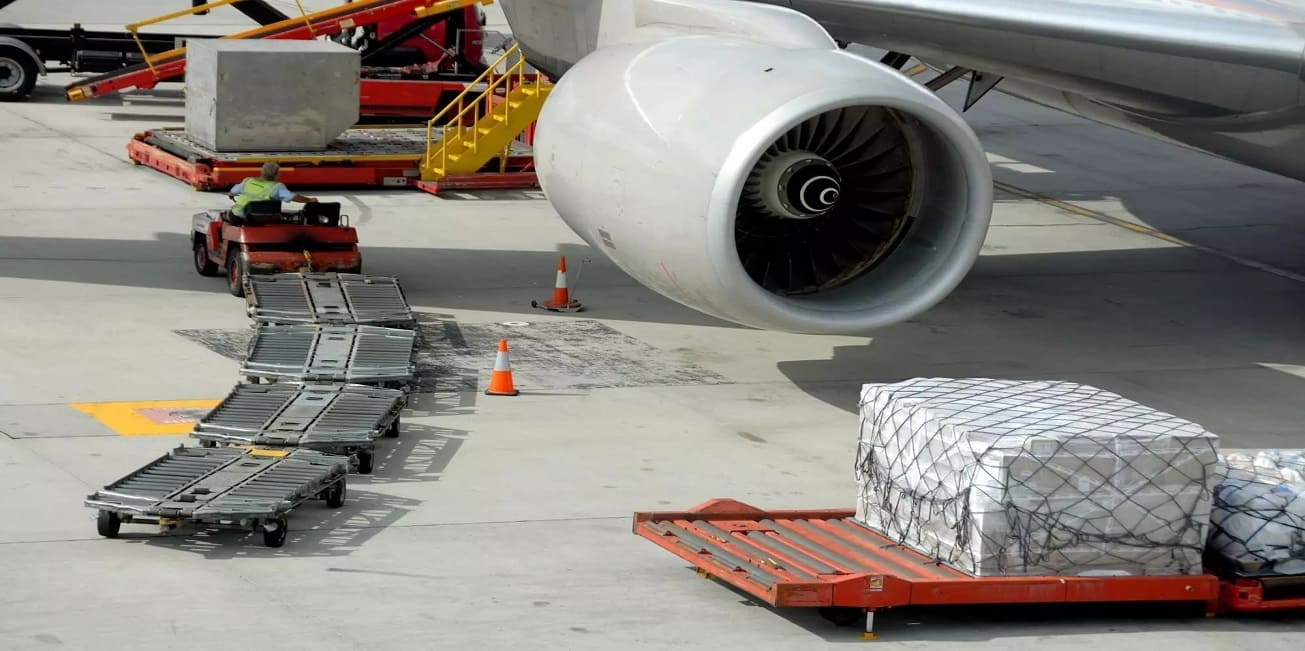
Air cargo demand across Asia-Pacific remains firm in 2026, led by artificial intelligence, technology and ecommerce shipments despite capacity constraints and disruptions, reports Mumbai’s STAT Trade Times.
Dimerco’s January freight report said flows to North America and Europe continue to be strong, even as global manufacturing growth slowed late last year.
Exports of semiconductors, servers and high-performance computing equipment are keeping volumes elevated on long-haul and Intra- Asia routes.
In Northeast Asia, demand for Al and semiconductor cargo is tightening space and pushing rates higher.
Taiwan’s shipments rose 56 percent year on year in November, while South Korea faces constrained capacity to both the US and Asia, driven by peak-season activity and major events.
China’s air freight demand is building ahead of Chinese New Year.
North China routes to Taipei and Singapore are seeing higher rates, while US- bound demand remains firm.
Hong Kong continues to face tight capacity to Singapore and Bangkok, with surging US- bound volumes.
Southeast Asia is under pressure from seasonal demand and ecommerce backlogs.
Vietnam, Singapore, the Philippines and Indonesia are experiencing congestion, while Thailand’s US and Canada lanes remain tight.
Shippers are advised to book several days in advance.
In India, fog and winter weather may disrupt schedules, though post-peak adjustments could case capacity.
Australia’s demand softened after Christmas before tightening again ahead of Chinese New Year.
North America demand is forecast to rebound in late January, while European operations face strike-related disruptions at major airports.
Dimerco said sustained demand from high-tech and ecommerce sectors will keep Asia-Pacific hubs such as Hong Kong, Taipei, Singapore, Incheon and Narita congested through 2026.
Pakistan starts to build 1,100-TEU PNSC vessel
Construction of a 1,100 TEU container vessel for the Pakistan National Shipping Corporation (PNSC) was commenced at Karachi Shipyard and Engineering Works, reports Karachi’s Dawn daily.
The steel-cutting ceremony was inaugurated by Federal Minister for Maritime Affairs Myhammad Junaid Anwar Chaudhry, with senior officials from the ministry, PNSC and the shipyard in attendance.
The minister described the project as a strategic milestone, saying it reflected the government’s commitment to revitalising shipping and shipbuilding in line with national economic priorities.
He said the vessel, built with domestic resources and expertise, would strengthen maritime infrastructure and reduce reliance on foreign carriers.
Mr Chaudhry added that the new ship would help conserve foreign exchange by cutting freight payments abroad and boost PNSC’s capacity to support Pakistan’s import-export trade.
Nearly 95 percent of the country’s trade volume is transported by sea, he noted, stressing that a strong maritime sector was vital for economic stability and growth.
Singapore nears record 45 million TEUS in 2025
Singapore posted record port performance in 2025, having handled 44.66 million TEUS, an 8.6 percent increase from 2024.
This was announced by Senior Minister of State for Law and Transport Murali Pillai, who was the Guest-of-Honour at the annual Singapore Maritime Foundation New Year Conversations event.
Singapore also achieved a record of 3.22 billion gross tonnage (GT) of vessel arrivals, a 3.5 percent annual increase.
Marine fuel sales also hit a new high at 56.77 million tonnes, a 3.4 percent increase from 2024, with continued growth in the use of alternative marine fuels, which rose to 1.95 million tonnes in 2025 compared to 1.35 million tonnes in 2024.
On 14 January 2026, the Maritime and Port Authority of Singapore (MPA) will open applications for new LNG bunker supply licences to better fulfil growing industry demand.
In parallel, the Standards for Port Limit LNG Bunker Vessels will be launched, covering equipment, operational performance and efficiency for such vessels operating in Singapore to enhance safety.
MPA and Enterprise Singapore, through the Singapore Standards Council (SSC), will also upgrade the existing Technical Reference for LNG Bunkering (TR56) to a Singapore Standard in Q2 2026, strengthening requirements for safe, transparent and quality assured LNG bunkering.
They will also publish Singapore’s first Technical Reference for Ammonia Bunkering in Q2 2026, to guide safe and reliable operations and support trials and early adoption.
Moreover, all bunker suppliers in Singapore had implemented digital bunkering by August 2025.
This initiative streamlines bunkering transactions and verifies electronic bunker delivery notes (eBDNS) through an electronic bunker delivery notes enquiry facility.
This has reportedly improved productivity and enhanced transparency in bunkering operations, saving up to 40,000 man-days annually in business process efforts.
Last November, MPA and DNV renewed their Memorandum of Understanding to deepen collaboration in maritime sustainability, digitalisation, innovation, and talent development.
Carriers offer record capacity for Chinese New Year
Ocean carriers on the Asia-North Europe trade are deploying record capacity this month as shippers rush to move cargo before Chinese factories shut for the Chinese New Year, reported London’s S&P Global.
Xeneta data shows 1.15 million TEU of capacity are of being offered in January, with only 25,000 TEU removed through blank sailings.
Planned capacity will ease to just over one million TEU in February.
Peter Sand, chief analyst at Xeneta, said demand was seasonally strong and could be further fuelled by market uncertainty.
Sea-Intelligence noted weekly capacity of 421,825 TEU, a 49 percent increase compared with the 2015-19 preCov baseline.
Analysts said shippers were frontloading volumes to Europe to offset extended transit times and to secure inventory before the holiday slowdown.
Hapag-Lloyd said demand was following seasonal patterns, with bookings expected to soften from late January as factories close.
Michael Aldwell of Kuehne + Nagel added that extended transit times had stretched the peak season as shippers adjusted supply chain plans.
Spot rates have surged to with the demand, with Asia- North Europe prices at US$2,700 per FEU this week, more than double early October levels.
Container Trades Statistics reported almost eight percent growth in Asia-North Europe volumes in the first 10 months of 2025 as US tariffs on Beijing redirected cargo to Europe.
Fitch maintains weak outlook for shipping in 2026
Fitch Ratings has kept a negative outlook for the global shipping sector in 2026, citing geopolitical instability and policy risks, reported Manila Times.
The agency expects slower GDP growth across major economies compared with 2025, with added downside risks from possible financial market corrections.
A key event risk is the potential resumption of Red Sea transits.
While restoring access to the Suez Canal would improve safety, it would reduce ton-mile demand, effectively increasing vessel supply and putting downward pressure on freight rates.
Trade protectionism and tariff disputes are already moderating volume growth, particularly in container shipping.
Fitch said new trade lanes may emerge but will not offset losses in primary routes.
Container shipping performance is forecast to weaken in 2026 as lower freight rates erode profts.
Tanker shipping, especially crude carriers, is expected to perform well, while dry bulk remains weak but stable.
LNG shipping and car carriers are projected to stay broadly steady.
Order books have risen moderately across segments, but low scrappage has led to capacity growth outpacing demand.
Operational costs are also set to rise under the International Maritime Organization’s pending Net Zero framework, increasing pressure on shipping companies’ cost structures.
Chinese New Year demand ups transpacific rates
Transpacific container rates are rising as shippers move cargo early ahead of the Lunar New Year, with Red Sea diversions adding longer lead times, reports American Shipper.
Freightos data showed Asia-Europe prices up one percent last week to US$2,742 per FEU, 12 percent higher than mid-December.
Asia-Mediterranean rates climbed 4 percent to $4,000 per FEU, the highest since July.
Analysts said early preholiday demand is keeping prices elevated.
Chinese factories will shut for several weeks from February 17, pushing shippers to secure space in advance.
Carriers tested a return of mega-vessels to the Red Sea-Suez Canal route, but safety and cost concerns remain.
Saudi Arabia bombed Yemen’s Port of Mukalla on December 30, heightening risks amid Houthi threats and regional instability.
On Asia-US lanes, west coast rates rose nine percent to $2,145 per FEU since mid-December, while east coast prices climbed 15 percent to $3,364 per FEU.
Analysts expect demand to keep rates firm into the holiday.
Global container volumes grew four percent through early Q4 despite weaker US imports.
S&P projects US imports will fall two percent in 2026, marking the third consecutive year of contraction in two decades.