
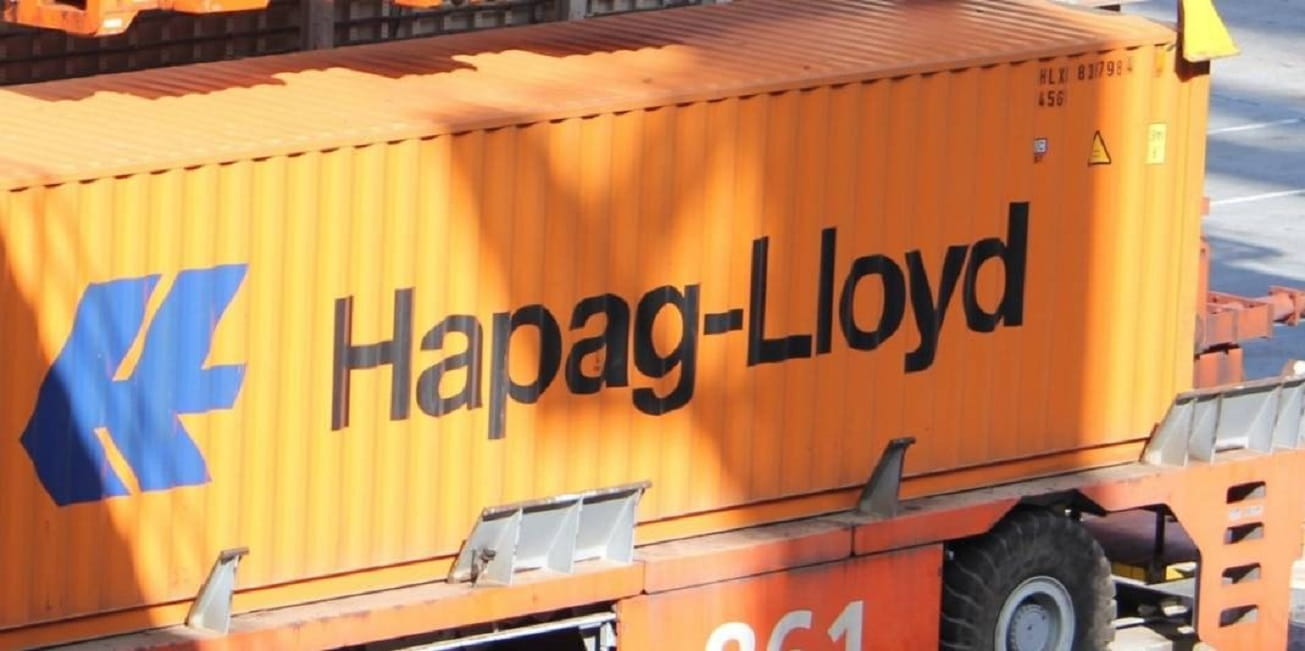
Saudi Ports Authority Mawani has added Hapag-Lloyd’s SE4 container service to Jeddah Islamic Port, linking the Red Sea gateway with Asian and Mediterranean ports, reported Saint Petersburg’s Port News.
The rotation deploys vessels of up to 17,000 TEU and connects Jeddah with Tianjin Xingang, Qingdao, Ningbo and Shanghai in China, Busan in South Korea and Tanjung Pelepas in Malaysia.
It also includes transshipment hubs in the Mediterranean before continuing to Singapore.
Mawani said the new service strengthens connectivity at Jeddah Islamic Port and supports cargo flows through Saudi Arabia’s main Red Sea maritime gateway.
The port has 62 berths, logistics zones for storage and reexport, and a direct truck transport system linking inland destinations.
Facilities include two container terminals and marine service berths, with total handling capacity reaching 130 million tonnes.
Hapag-Lloyd, based in Germany, operates scheduled services across global trade routes, while Mawani oversees the Kingdom’s port infrastructure and logistics integration.
Nigerian port traffic up 24.8pc in 2025
Nigerian ports handled 129.3 million tons of cargo in 2025, up from 103.6 million tons in 2024, marking a 24.8 percent increase, reported Geneva’s Ecofin Agency.
Exports accounted for 39 percent of total traffic, while imports dominated with 59.2 percent.
Transshipment represented 1.8 percent.
Container traffic rose 25.7 percent to more than 2.1 million TEUS, driven by a 32.8 percent rise in import containers.
Export volumes increased 3.1 percent, while transshipment surged 205.8 percent.
Bulk goods remained dominant, accounting for 54.7 percent of cargo volumes, while containerised freight represented 24 percent.
Lekki Port handled 40.6 percent of cargo, followed by Onne at 19.1 percent and Apapa at 16.7 percent.
Ship calls rose nearly 12 percent to 4,477, reflecting stronger integration of Nigerian ports into global trade.
However, congestion at Apapa and Tin Can Island ports may worsen unless expansion and modernisation investments keep pace with traffic growth.
Four petrol-laden ships arrive at Port Qasim amid fuel crisis
Amid the recent energy crisis and government measures to cope with the prevailing global fuel shortage triggered by the ongoing US-Israel-Iran conflict, four petrol-laden ships have arrived at Port Qasim, officials confirmed.
Energy & Utilities According to Port Qasim officials, two more ships are scheduled to arrive soon-one carrying 55,000 tonnes on March 12 and another with 34,000 tonnes on March 13.
The development comes days after the federal government raised petrol and diesel prices by Rs55 per litre as surging global oil prices, fuelled by the US-Israel war with Iran, put pressure on domestic energy costs.
OOCL suspends Gulf bookings amid conflict
Orient Overseas Container Line has suspended new bookings to and from Gulf countries due to the escalating Middle East conflict and restrictions on traffic through the Strait of Hormuz, the company announced.
The carrier said vessels have been instructed to maintain a safe distance from the Persian Gulf and Strait of Hormuz.
Bookings are halted for Bahrain, Saudi Arabia, Qatar, Kuwait, Oman, Iraq and the United Arab Emirates.
OOCL noted that Asia-Jeddah dry cargo is not included in the suspension.
Customers with cargo en route are advised to contact representatives to arrange changes of destination where feasible.
The company said it is assessing alternative discharge ports for onboard cargo in line with its bill of lading terms and will provide updates through customer service channels.
OOCL asked shippers to reach out to local offices for assistance.
New Gulf war increases air freight rates
Escalating conflict in the Middle East has disrupted global air cargo networks as Gulf hubs suspend operations and airlines reroute capacity, reports London’s Air Cargo Week.
Freightos said closures across the Gulf have grounded aircraft operated by Emirates Sky Cargo, Qatar Airways Cargo and Etihad Cargo, which together account for 13 percent of global air cargo capacity.
Judah Levine of Freightos warned the disruption could spread if the conflict continues.
Gulf hubs such as Dubai, Abu Dhabi and Doha serve as key transit points linking Asia, Europe and Africa.
Their suspension has already affected supply chains, with carriers increasing direct Asia-Europe flights and forwarders securing charter capacity.
Kuehne + Nagel said forwarders are chartering Far East-West flights to replace lost lift, but warned of cargo backlogs in Asia by week’s end as shipments to Europe and the US struggle to find space.
Azerbaijan builds AD Ports box ships
Baku Shipyard LLC has begun construction of two containerships ordered by AD Ports Group of the UAE, reported Russia’s Interfax.
The steel-culting ceremony on March 2 marked the official start of production.
Each vessel will measure 149.5 metres in length, 21 metres in breadth, 8.6 metres in height and have a draft of 4.5 metres.
Combined cargo capacity is 780 TEU.
The contract, signed on September 16, 2025, is the first order Baku Shipyard has received from AD Ports Group.
The ships are scheduled for completion in 2028 and will operate in the Caspian Sea.
Azerbaijan Transport and Communication Holding (AZCON), part of Baku Shipyard, said the vessels will strengthen the Middle Corridor of the Trans-Caspian International Transport Route linking Asia and Europe.
Baku Shipyard was founded after President Ilham Aliyev laid its cornerstone in 2010.
It was established in 2011 as a joint venture between SOCAR and the Azerbaijan Investment Company, and opened in 2013.
The shipyard builds auxiliary, general-purpose and specialised vessels, including tugboats, crane ships, passenger vessels and tankers.
It also undertakes ship repair and refitting.
AD Ports Group, formerly Abu Dhabi Ports Company, is a port, industrial and logistics operator.