
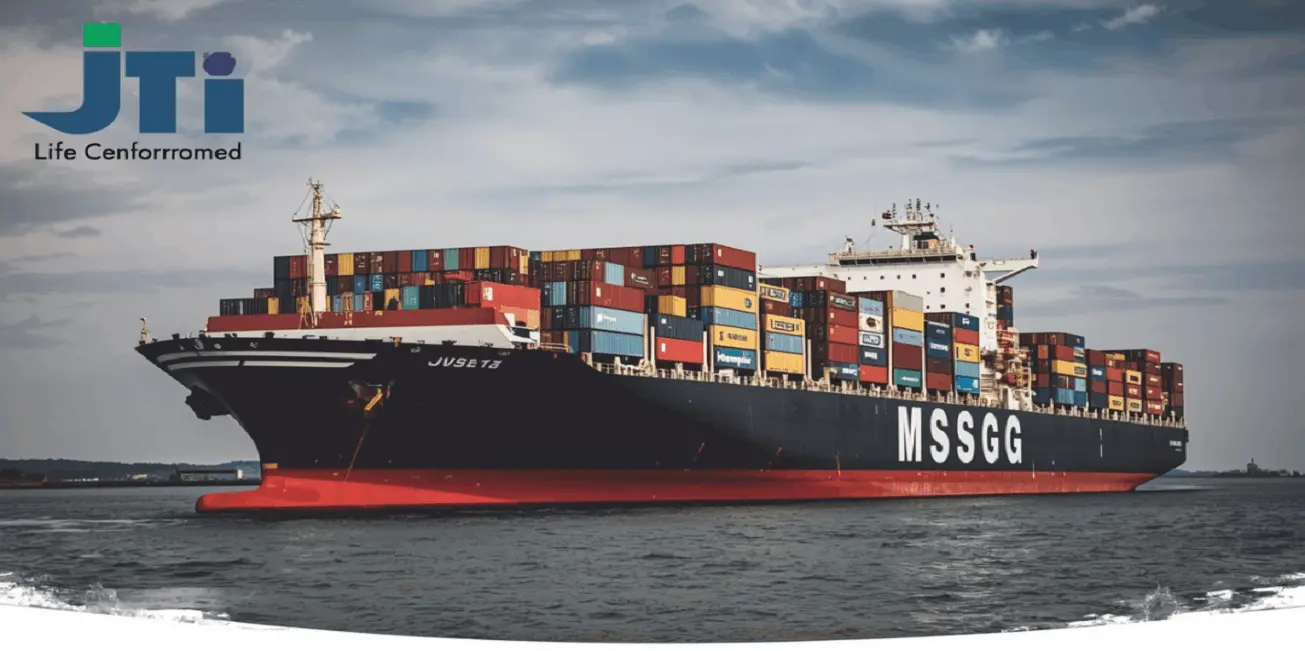
The logistics landscape for trade between Japan and Pakistan has reached a new milestone.
The ITI Service (Japan Thailand Vietnam Indian Subcontinent) is now officially operational, providing a robust, direct maritime link designed to meet the growing demands of importers and exporters.
By integrating previous routes into a singular, high-frequency service, the JTI ensures enhanced schedule reliability and faster transit times.
This service is specifically tailored for the seamless transport of automobiles, machinery, and industrial components, connecting Japan’s major ports directly to Pakistan’s two primary gateways: Karachi Port and Port
Qasim.
Efficient Routing & Port Rotation
The JTI service offers a comprehensive loop that covers key strategic hubs across East and Southeast Asia before arriving in Pakistan:
Japan Origins: Tokyo Yokohama – Shimizu – Nagoya – Osaka-Kobe
Transit Hubs: Cai Mep (Vietnam)-Laem Chabang (Thailand) – Singapore-Port Klang (Malaysia) Regional Arrivals: Nhava Sheva – Pipavav Pakistan Destined: Karachi –
Port Qasim (Bin Qasim) Return Loop: Colombo – Laem Chabang – Cai Mep – Tokyo Key Service Highlights Direct Connectivity: Eliminate the need for complex transshipments with a direct loop to Karachi and Port Qasim.
Weekly Frequency: Regular sailings ensure your supply chain remains consistent and predictable.
Optimized Transit: Direct calls at Japan’s “Big Six” ports provide the fastest exit points for Japanese cargo.
Drewry: The World Container Index decreased 3% this week 16-2026
In accordance with the assessment of Drewry Supply Chain Advisors, the container rates this week returned to the decreasing tendency.
As it is mentioned, their composite World Container Index decreased by 3% to $2,246 per 40- foot container.
Freight rates from Shanghai to Rotterdam decreased by 3% or $79 to $2,229, and Rotterdam to Shanghai increased by 1% or $7 to $599 per 40-foot container.
The rates from Shanghai to Genoa decreased by 2% or $77 to $3,343, while Shanghai to Los Angeles decreased by 3% or $100 to $2,810.
As it is also reported, those on Shanghai to New York decreased by 3% or $119 to $3,552 per 40-foot container.
Meanwhile, the rates from Los Angeles to Shanghai remained unchanged at $762, and Rotterdam to New York increased by 3% or $62 to $2,030 per FEU.
Furthermore, the freight from New York to Rotterdam this week decreased by 4% or $41 to $1,022 per 40-foot container.
Premier Alliance shifts Gulf cargoes to Khor Fakkan
The Premier Alliance will begin calling at Khos Fakkan port in the United Arab Emirates next week, using it as an interim hub for Middle East reported London’s S&P Global.
The group, comprising Yang Ming Marine Transport, Ocean Network Express and HMM, suspended calls at Arabian Gulf ports in March after missile and drone attacks and Iran’s closure of the Strait of Hormuz.
Yang Ming said Khor Fakkan offers a stable operating environment and will serve as the primary discharge hub for vessels originally scheduled to call Gulf ports.
Cargo bound for Arabian Gulf destinations will be moved onward by feeder vessels or alternative transshipment solutions.
The shift comes as Iran’s foreign ministry announced the Strait of Hormuz is completely open to commercial shipping during the Iran-US ceasefire, though the International Maritime Organization said it is still verifying conditions for safe passage.
The first vessel, the 16,000-TEU HMM Mir, is due to berth Sunday, followed by the 13,253- TEU HMM Peridot early next week and the 13,000-TEU HMM Garnet around April 26.
The alliance has held cargo onboard ships for the past month while assessing risks at Gulf ports such as Damman and Jebel Ali.
Some eastbound services to the US West Coast have also been rerouted via Singapore.
MSC revamps its Asia-US east coast network
Mediterranean Shipping Co (MSC) will rework its tranpacific services from May to improve reliability and direct China links into US east coast ports, reported New York’s Journal of Commerce.
MSC’s Empire Service will drop Qingdao, focusing on Shanghai, Ningbo and Busan.
On the US side, Jacksonville and Miami will be replaced by Norfolk and Port Everglades.
The new rotation begins May 27 with the 6,178TEU MSC Leo VI departing Shanghai.
Qingdao will be added to the Amberjack service into the US southeast, while calls to Yantian and Xiamen will be removed.
Norfolk will be replaced by Jacksonville.
MSC said the adjustments will improve transit times and stability, starting May 20 from Qingdao.
The Emerald service from Southeast Asia will drop Kaohsiung in favour of Xiamen, providing direct access to major US east coast ports.
The new rotation begins May 18 with the 7,000 TEU Zim Topaz sailing from by 3% or $62 Singapore.
MSC said the network revamp consolidates China calls and reduces exposure to congestion risks, while enhancing coastwide coverage from southeast Asia.
OOCL expands China- Indonesia network with CIS3
Orient Overseas Container Line (OOCL) has unveiled a new China-Indonesia Service (CIS3), expanding its intra-Asia network and strengthening links between South China and key Indonesian ports.
The move follows the earlier launch of a China-Indonesia Service (CISI), introduced to enhance network coverage and improve schedule reliability across the trade.
Set to commence on 16 May 2026, the service will connect major export hubs in South China with Jakarta and Surabaya, two of Indonesia’s principal gateways.
The move is aimed at improving transit times and offering more consistent scheduling across the corridor.
The CIS3 rotation will call at Xiamen, Nansha, Jakarta, Surabaya, Yantian, before returning to Xiamen.
For ports and terminals, the f this addition of CIS3 is expected to support more stable cargo flows between the regions, particularly as intra-Asia volumes continue to grow.
Enhanced connectivity with Indonesia’s core gateways may also help streamline landside distribution and reduce congestion pressures at key nodes.
The launch reflects ongoing efforts by carriers to refine regional networks, balancing frequency, coverage, and reliability in response to shifting trade dynamics across Asia.
Cargo rates rise despite tonnage drop
Global air cargo rates continued to climb in mid-April despite falling worldwide tonnages and increased Gulf belly hold capacity, reported Sydney’s Asian Aviation citing WorldACD Market Data.
Average worldwide spot rates rose three percent in week 15 to US$3.76 per kilo, 37 percent higher year on year and more than 40 percent above late February levels when US and Israeli strikes on Iran began.
North America origins saw the largest weekly increase, up six percent to $2.73 per kilo, 52 percent higher year on year.
Spot rates from Africa rose 4 percent to $2.95 per kilo, 62 percent higher year on year, while Asia Pacific rates edged up two percent to $4.95 per kilo, 24 percent higher year on year.
Middle East and South Asia rates dipped one percent to $4.81 per kilo but remained 66 percent higher year on year.
Worldwide tonnages fell six percent week on week, following high- a three percent drop the previous week, leaving volumes eight percent below last year.
Europe origins saw the steepest decline, down 15 percent due to Easter holidays, with Africa, Asia Pacific, MESA and North America also recording falls.
Global capacity rose one percent week on week, led by a seven med percent recovery from MESA.
Capacity from the region remains 20 percent below last year, though freighter use and strong demand lifted tonnages five percent year on year.
South Asia capacity has recovered to within five percent of pre-war levels, with new direct services to Europe.
Rates from MESA to Europe surged 89 percent year on year to $4.53 per kilo, including a 94 percent rise from Bangladesh.
Observers warn that fuel inflation and shortages may drive further cancellations and rate increases unless the fragile ceasefire between Washington and Teheran holds.
Belly hold capacity through the Middle East is expected to take time to recover, while container shipping remains disrupted. Analysts say air cargo pricing is likely to stay elevated for the foreseeable future.