
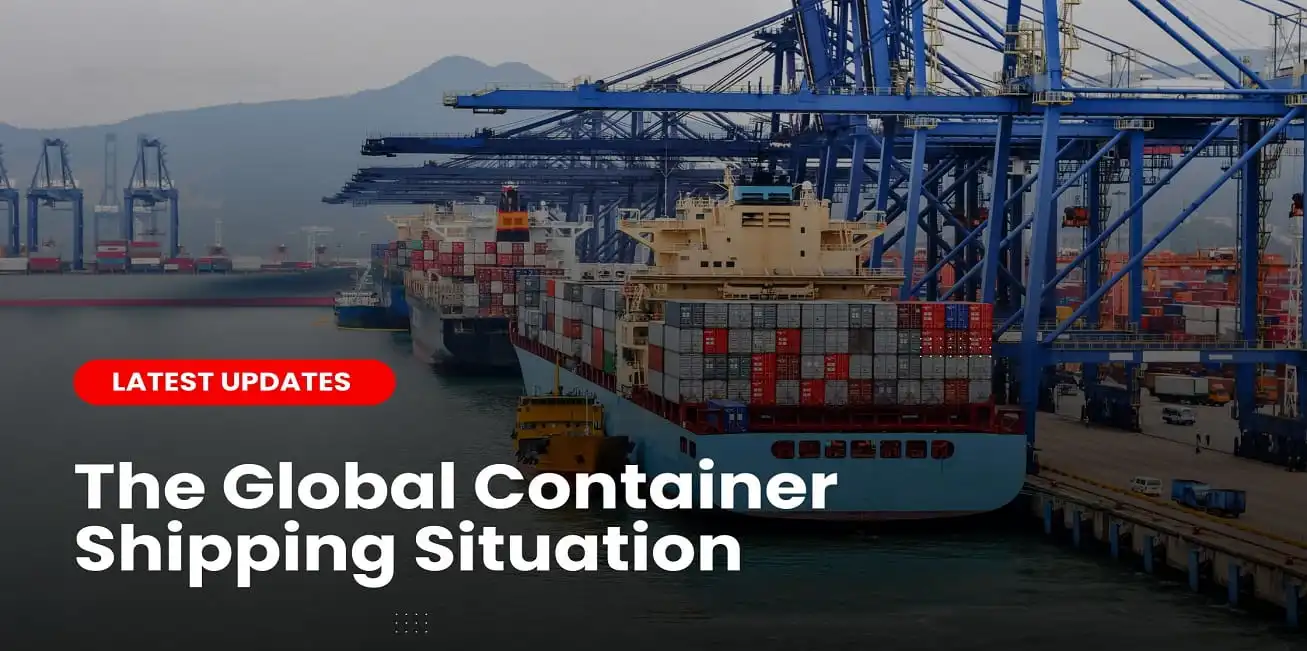
Container shipping lines announced a series of service launches and schedule changes between 23 May and 5 June, covering Asia, Africa, Europe and the Americas, re- ported a Kuehne+Nagel press release.
Maersk and CMA CGM revised the Safari 1 Asia-South Africa service, adding Hong Kong and deploying nine vessels of 9,800 TEU.
ONE adjusted the SAC and SAS services to improve efficiency, with new rotations in June.
Maersk launched the T12 service linking Asia and the Indian Subcontinent, while COSCO and OOCL introduced the SE12/SIS2 service.
connecting China, Singapore and India.
Ocean Alliance revised the MEX Asia-Mediterranean service, adding Jeddah, with 13 vessels of 17,300 TEU.
The group also updated the PEX3 Transpacific service, adding Miami.
Maersk will launch the TPX seasonal Transpacific service on June 9 with seven vessels of 4,000 TEU.
ONE revised the FEI Asia- North Europe service, adding Le Havre and removing Algeciras, with first sailing on 27 July.
Maersk will launch the ACI Asia-South America service on 5 July, while CMA CGM rationalised the ACSA1 and M2X services.
CMA CGM revised the MEDEX Mediterranean-Indian Subcontinent-Middle East service, dropping Beirut and Port Said and adding
Valencia, Fos Sur Mer and Djibouti.
MSC updated its INDUSA service to the US market with a new rotation.
CMA CGM revised the EPIC North Europe-Indian Subcontinent service, reintroducing westbound Suez Canal transits.
Gemini Cooperation updated the TA4 Transatlantic service, replacing Hamburg with Bremerhaven.
Maersk revised the SAMBA North Europe-South America East Coast service, adding Itapoa and dropping Rio Grande.
The changes reflect ongoing adjustments to meet demand and optimise global container trade networks.
Global Ship Lease orders 10 box ships
Global Ship Lease has entered the newbuilding market for the first time, signing contracts for 10 containerships in a deal valued at about US$917 million, reported Singapore Splash 247.
The Athens-based owner said the mid-sized, ultra-high reefer, wide-beam vessels will be delivered between the fourth quarter of 2028 and the first quarter of 2030.
All ships have secured multi- year charters upon delivery.
The charters carry a TEU- weighted average duration of 6.7 years and are expected to generate about US$665 million in aggregate adjusted EBITDA over their initial terms.
The company said the programme is supported by its balance sheet strength and charter backlog of about US$2.1 billion.
The order marks a strategic shift for the George Youroukosled firm, which has traditionally focused on acquiring secondhand tonnage rather than commissioning new vessels.
Shipbuilding sources said eight of the ships will be conventionally fuelled 6,200 TEU units built by China’s Taizhou Sanfu Ship Engineering.
Executive chairman Youroukos said the vessels were designed to meet evolving liner requirements while offering flexibility across trade routes.
He added that fixing all 10 ships on multi- year charters was consistent with the company’s strategy of limiting downside risk while retaining upside potential.
Global Ship Lease currently controls about 70 containerships and has built its business around buying and chartering existing vessels.
The company said the newbuilding programme will ensure its ageing fleet is replaced with modern ships capable of serving global.
Port of Rotterdam shifts container flows off-peak
Rising container volumes at the Port of Rotterdam are increasing pressure on terminal operations, road infrastructure and hinterland logistics, prompting operators to shift more freight movements outside peak daytime hours.
Logistics provider ODIN Warehousing & Logistics has expanded off-peak container transport operations across multiple Maasvlakte terminals, moving a growing share of truck activity to evening and overnight windows between 18:00 and 06:00, According to the company, congestion and longer waiting times during daytime operations have reduced efficiency across Rotterdam’s container supply chain
Alain Grotenhuis, Chief Executive Officer of ODIN Warehousing & Logistics, said: “Whereas five years ago you could easily pick up six containers between 6 am and 6 pm, now you can often only pick up two or at most three. Given the volumes we handle, off-peak transport was the only logical step.
The company stated that night-time operations provide greater slot availability at terminals, shorter waiting times and improved schedule reliability for container flows moving inland.
ODIN said the operational shift has also increased truck productivity by allowing more container moves to be completed using the same equipment and driver capacity.
To support the strategy, the operator has invested in electric trucks and additional container chassis for use across Rotterdam operations.
The vehicles are charged using on-site renewable electricity.
According to ODIN, electric trucks are particularly suited to overnight transport due to lower congestion levels and more consistent driving patterns, helping improve energy efficiency while reducing emissions and noise levels.
Grotenhuis stated: “With off-peak transport, we significantly increase productivity.
This not only benefits our own operations but also enables us to offer customers reliable service at competitive rates.”
The company added that wider adoption of off-peak logistics will depend on increased collaboration across the supply chain, including extended operating hours at depots and supporting logistics facilities.
ODIN said pilot projects and longer opening hours across parts of the Rotterdam logistics network are already helping accelerate adoption.
Grotenhuis concluded: “Off peak transport is not a future scenario at all.
We’re already doing it, and it works.
polymer electrolyte membrane (PEM) electrolyser and is designed to produce around 125 tonnes of hydrogen annually at full capacity.
Around one quarter of output will be used directly by the Klaipeda Port Authority, including for a hydrogen-powered waste collection vessel and a Toyota Mirai already integrated into its operational fleet.
The port authority said the initiative is intended to validate hydrogen use in real operational conditions while supporting wider adoption across the transport and logistics chain.
The facility is designed as open access infrastructure.
with potential applications across road freight, rail operations and port services.
The LTG Group, Klaipeda Stevedoring Company BEGA and Volvo Lietuva are among the partners exploring future hydrogen use cases.
Commercial hydrogen supply is expected to begin in autumn 2026.
The project is implemented under the Next Generation Lithuania recovery and resilience plan, funded through the European Union’s NextGenerationEU facility.
Total investment is estimated at around 12 million ($13.8 million), with approximately $6 million ($6.9 million) provided through EU funding.
Saudi Arabia adds Red Sea route
Saudi Arabia’s Ports Authority (Mawani) has launched a new shipping service connecting Jeddah Islamic Port with Mundra Port in India and the Port of Djibouti, reported Dubai’s Gulf News.
The service, operated by Emirates Shipping Line, has a carrying capacity of up to 2,144 TEU.
Mawani said the route will enhance supply chain efficiency and facilitate trade flows across the Red Sea, one of the world’s busiest maritime corridors.
The initiative is part of Mawani’s strategy to strengthen Saudi Arabia’s position in global logistics and transport perforinance indicators.
It also supports the growth of national exports by improving connectivity with key regional ports.
The new service aligns with the objectives of the National Transport and Logistics Strategy, which aims to establish the Kingdom as a global logistics hub linking Asia, Africa and Europe.
CargoAi connects CargoMART to AI
CargoAi has made its CargoMART marketplace data accessible through Al assistants including ChatGPT, Claude and Microsoft Copilot via the Model
Context Protocol, allowing users to interact with air cargo services directly from their preferred platforms, reports London’s Air Cargo Week.
CargoMART users can now search and compare rates, review flight options, create shipments, book cargo with more than 105 airlines and track shipments across more than 240 airlines using natural language prompts.
They can also build custom Al agents to automate operational workflows.
The move extends CargoAi’s Al-first strategy, enabling freight forwarders, airlines and logistics teams to access live cargo intelligence and automation within their enterprise AI environments.
CargoAi said the centre of gravity in operations is shifting from traditional management systems toward AI interfaces such as Microsoft Copilot, Claude and ChatGPT, which are becoming orchestration layers for daily workflows.
“As AI adoption accelerates, teams are looking for flexible ways to build workflows using the tools they already use,” said Matt Petot, Founder and CEO of CargoAi.
He added that the company is opening its intelligence to every Al platform to make cargo operations faster and more efficient.
CargoAi was founded in 2019 with Al at its core and has deployed Al-driven capabilities across the air cargo value chain for more than seven years.
Francois-Xavier Gsell, CTO, said making CargoMART data accessible through MCP allows teams to integrate cargo intelligence seamlessly into existing workflows.
CargoAi’s Al capabilities already include rate intelligence, predictive tracking, automated quoting and the Cargo COPILOT conversational agent.
With MCP connectivity, CargoMART users can now build their own Al-driven workflows across platforms such as ChatGPT, Claude and Microsoft Copilot.
Fuel short-ages could idle 10pc of fleet
The shipping industry faces looming fuel crisis that could paralyze up to 10 percent of the global feet within months, according to
Larry Johnson, head of freight at Mercuria, told London’s S&P Global.
Speaking to London’s S&P Global, Mr Johnson said refiners are diverting feedstocks away from marine fuel to capture higher margins from diesel and jet fuel, leaving shipping exposed to regional stock-outs by July and potential outages in major hubs by August or September.
Unlike other sectors, shipping lacks state reserves to cushion supply shocks.
A steeply backwardated market has encouraged suppliers to liquidate inventories, draining stocks in Singapore, Northwest Europe and Fujairah.
Singapore has tapped European and Russian supplies to slow losses, but inventories remain near one-year lows.
He warned that once marine fuel runs out, ships will be forced to compete with other sectors for diesel, which already trades at a premium.
The industry consumed about 3.3 million barrels per day of residual fuels and 870,000 barrels per day of marine gasoil in 2025, equal to almost five percent of global oil product demand
Prices for 0.5 percent sulphur fuel oil nearly doubled in the first three weeks of the war, lifting the Platts bunker world index to a four- year
high of $1022 per tonne before easing to $830.
Confidence in future availability is faltering as shortages deepen.
Mr Johnson said prolonged disruptions could trigger congestion on the scale of the Covid-19 pandemic, shutting down as much as 10 percent of marine traffic.
Lower-margin sectors such as dry bulk would be hit hardest, with knock-on effects for agriculture and freight rates.
Charter Link Logistics Expands with New Singapore Office
Charter Link Logistics, a leading global neutral cargo consolidator and Less-than-Container Load (LCL) specialist, recently announced the official opening of its new subsidiary, Charter Link Logistics (Singapore) Pte. Ltd.
Founded in 1998, Charter Link has built a robust global network spanning 78 offices across 28 countries.
The company consistently ranks among the top LCL service providers along key international trade corridors.
The establishment of its Singapore office marks a significant milestone in the Group’s continued global expansion strategy.
“The establishment of our Singapore office represents an important step in strengthening Charter Link’s direct presence in the market,” said Gary Goh, Managing Director of Charter Link Logistics (Singapore) Pte. Ltd.
“We have transitioned to bring our brand, values, and service standards closer to our customers.
By establishing our own footprint, we reinforce our commitment to 100% neutrality while delivering greater consistency, transparency, and reliability across our network.”
As one of the world’s leading maritime and logistics hubs, Singapore plays a pivotal role in global trade.
The new office will enhance Charter Link’s operational capabilities in Southeast Asia while strengthening connectivity across its multi-port global network.
“Every new branch reflects a long-term commitment to our global partners,” added Michael C. Tsui, Executive Director of Charter Link Logistics Group.
“Singapore is more than a strategic gateway-it connects our people, network, and shared values.
By bringing Charter Link’s hallmark reliability and customer centric approach to this market, we aim to support our stakeholders as they grow confidently along- side us in an evolving global logistics landscape.”
The Singapore subsidiary will focus on delivering global LCL.