
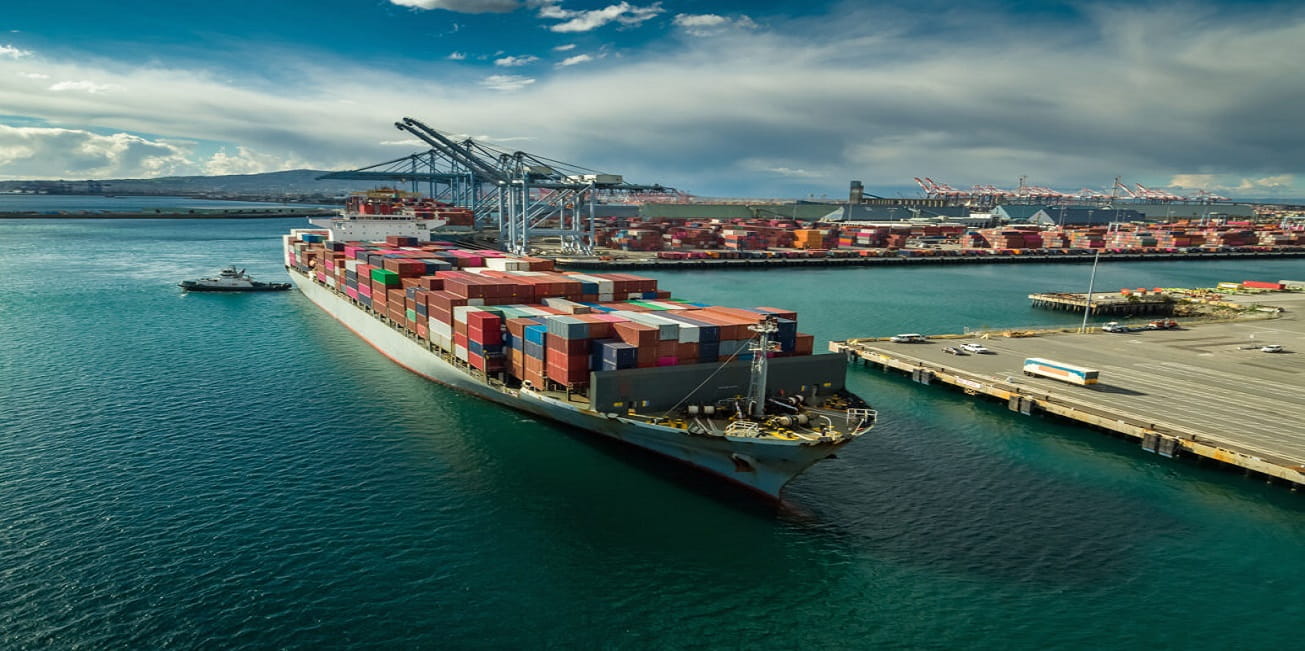
Asia shipped 1.88 million TEU to Europe in January, up six percent year on year, reports London’s Port Technology International.
The figure marked a third consecutive month of growth and set a new monthly record.
China and Hong Kong accounted for 1.53 million TEU, up 5.8 percent, while Northeast Asia contributed 128,577 TEU, up 3.4 percent.
Southeast Asia supplied 221,753 TEU, an 8.8 percent increase.
North Europe received 1.14 million TEU, up 3.6 percent.
The Western Mediterranean took 362,180 TEU, up 10.2 percent, and the Eastern Mediterranean 370,389 TEU, up 9.8 percent.
In contrast, imports from Europe to Asia fell 7.8 percent to 421,619 TEU, marking a second month of contraction.
North Europe accounted for 279,426 TEU, down 8.8 percent, while the Western Mediterranean dropped 15.4 percent to 64,179 TEU.
The Eastern Mediterranean rose 3.9 percent to 78,014 TEU.
By destination, China received 207,893 TEU, down 3.9 percent.
Northeast Asia took 87,653 TEU, down 8.9 percent, and Southeast Asia 126,071 TEU, down 13 percent.
The data highlights the persistent imbalance on the Asia-Europe trade lane, with strong outbound flows from Asia contrasting with weaker return cargoes from European ports.
Pakistan sees transshipment boost from Iran war
Pakistan is experiencing a modest rise in transshipment activity as Gulf shipping disruptions force carriers to reroute cargo, reported Jeddah’s Arab News.
The government last week revised international transshipment rules, allowing cargo handling within and outside ports.
Shipping lines diverted vessels from Dubai and Salalah, unloading containers in Karachi instead, according to the Pakistan Ship’s Agents Association.
Karachi Port Trust data showed three private terminals handled more than 8,300 TEU this month.
Karachi Gateway Terminal Limited managed 1,200 TEU, Karachi International Container Terminal 1,827 TEU and South Asia Pakistan Terminal Limited 5,286 TEU.
Analysts said the uptick is temporary, generating incremental port income but no windfall gains.
Investment analyst Unzilla Shaikh noted the benefit remains modest despite diverted cargo flows.
Officials said private terminals pay royalties ranging from $15 to $36 per container to port operators.
The diversion has created congestion, with storage areas filled, according to PSAA Secretary-General Syed Tahir Hussain.
Mr Hussain added Pakistan could make itself a permanent transshipment hub by offering more competitive tariffs than rivals such as Dubai, Salalah, Colombo, India and Hong Kong.
“Previously, we were not even in the race,” he said. “
Now Pakistan has a unique opportunity as ships are looking for nearby alternatives.”
Port of Melbourne volumes rise 5 percent in February
The Port of Melbourne recorded a 5.2 percent year-on-year increase in container throughput in February 2026, handling 276,000 TEUS.
Full container import volumes (excluding Bass Strait traffic) reached 110,000 TEUs, rising by 1.9 percent compared with the same month last year.
Meanwhile, full container exports totalled 59,000 TEUs, reflecting more stable outbound demand following earlier volatility.
The uplift in volumes points to a modest recovery in containerised trade flows, supported by steady import demand across key consumer and industrial goods segments.
Across non-containerised cargo, total trade reached 2.02 million revenue tonnes, representing a 7.6 percent year-on-year decline in February 2026.
The drop suggests continued pressure on bulk and breakbulk segments despite improving container performance.
The latest figures indicate a shift in momentum following weaker results earlier in the year, with container volumes showing resilience even as non-container trade remains subdued.
In February, International Container Terminal Services Inc., through its wholly owned subsidiary Victoria International Container Terminal Ltd., secured a 26- year extension to operate and manage the Webb Dock East terminal at the Port of Melbourne, extending the contract to 2066.
DP World Jeddah boosts Red Sea with new cranes
DP World has added three semi-automated quay cranes at Jeddah Islamic Port, reported UK’s Sea trade Maritime News.
The new ZPMC-built cranes, each with a lifting capacity of 65 tonnes, raise the number of ship- to-shore cranes at the terminal from 14 to 17.
They form part of an US$800 million modernisation programme aimed at doubling capacity from 1.8 million to four million TEU, with a long-term target of five million TEU.
The South Container Terminal spans 2,150 metres of quay length, including a deep-water berth with an 18-metre draught, enabling it to accommodate up to five ultra-large container vessels simultaneously.
The facility is equipped with advanced automation and modern handling systems to improve turnaround times.
Mohammad Alshaikh, CEO of DP World KSA, said the expansion strengthens operational agility and helps customers move goods more efficiently.
He added the company is working with port authorities and security partners to ensure safe operations amid regional challenges.
In 2025, DP World Jeddah handled more than 1.3 million TEU, more than doubling volumes year on year as shipping lines returned to the Red Sea corridor.
Weekly services increased to 38 calls.
The company has also expanded freight forwarding operations, improving inland connectivity and supply chain solutions across Saudi Arabia.
The investment supports Saudi Vision 2030 and underscores DP World’s focus on infrastructure, technology and operational capability in the Red Sea region.
Cosco Shipping Lines resumes Mideast bookings
Chinese shipping giant Cosco Shipping Lines has resumed new bookings for general cargo containers from the Far East to seven Middle East countries, reports Denmark’s Shipping Telegraph.
The company said bookings are now open for shipments to the United Arab Emirates, Saudi Arabia, Bahrain, Qatar, Kuwait, Iraq and Oman via multi-modal transport.
The advisory warned that arrangements remain subject to change given the volatile regional situation.
Cosco clarified that bookings already accepted before the March 25 advisory will not be affected.
Customers are urged to contact Cosco or local agents for details on freight charges and carriage terms.
Transport solutions include using the Bonded Land Bridge via Khorfakkan or Fujairah Port for cargo bound for Abu Dhabi and Jebel Ali, with feeder links to upper Gulf states.
Oman cargo will be transshipped via Nhava Sheva, India to Sohar.
Cosco halted new bookings three weeks ago after Iran closed the Strait of Hormuz to most traffic.
The resumption follows Tehran’s statement that vessels from non-belligerent nations may pass through the waterway.
Iran told the UN maritime agency that ships not linked to the US or Israel qualify as “non-hostile” and may benefit from safe passage.
The move comes amid heightened tensions from the US- Israel conflict with Iran, which has disrupted global energy flows.
kShipping fuel costs surge amid Iran conflict
The global shipping industry is spending an extra EUR340 million (US$390 million) per day on fuel due to the war in Iran, with cumulative costs surpassing EUR4,6 billion since late February, reports Athens’ Safety-4Sea.
Transport & Environment (T&E) is a Brussels-based NGO that leads European advocacy for clean transport and energy, working to decarbonise cars, trucks, planes, ships, and the fuels that power them.
T&E said the surge stems from disrupted oil supply routes and rising geopolitical risk.
Marine fuel prices have spiked, with very low sulphur fuel oil in Singapore hitting EUR941 per tonne, a 223 percent increase since January.
LNG prices have climbed 72 percent since early March.
With about 99 percent of the global fleet reliant on fossil fuels, shipping remains highly vulnerable to price swings.
T&E noted the narrowing cost gap between. conventional fuels and e-fuels, with some ports showing near parity between marine gas oil and e-fuels.
The group urged investment in alternatives such as electrified short-sea ferries, wind-assisted propulsion and efficiency measures like slow steaming.
These steps could cut fuel use and shield operators from future shocks.
T&E called for stronger EU backing under FuelEU Maritime and faster adoption of European e-fuels.
It argued that cleaner technologies would bolster energy security and stabilise long-term costs, contrasting with industry claims that green measures are too expensive.
Air cargo rates rise strongly in Gulf conflict
Global air cargo rates continued to climb in week 12 as carriers and forwarders adjusted to disrupted markets following US and Israeli attacks on Iran and retaliatory strikes, reports the American Journal of Transportation citing WorldACD.
Worldwide tonnages dipped one percent compared with the previous week and were down six percent year on year.
But average full-market rates rose seven percent week on week to US$2.84 per kilo, while spot rates increased six percent to $3.38 per kilo.
Spot prices from Middle East and South Asia origins surged eight percent week on week, with rates to Africa up 18 percent to $4.76 per kilo.
Rates from the Gulf rose 11 percent, including a 24 percent rise to Africa.
European and North American carriers remain restricted from Gulf markets.
Average spot rates from India, Bangladesh and Sri Lanka to Europe doubled compared with a month ago, reaching $4.44, $4.82 and $4.85 per kilo respectively.
Forwarders reported backlogs and capacity constraints, with jet fuel shortages adding pressure.
Asia Pacific spot rates to Europe rose eight percent week on week to above $5 per kilo, 26 percent higher year on year.
Demand remains strong and space tight across major origin markets.
Despite a slight rebound in global capacity, rising demand, restricted supply and higher fuel costs are expected to drive further rate increases in coming weeks unless the Gulf conflict is swiftly resolved.