
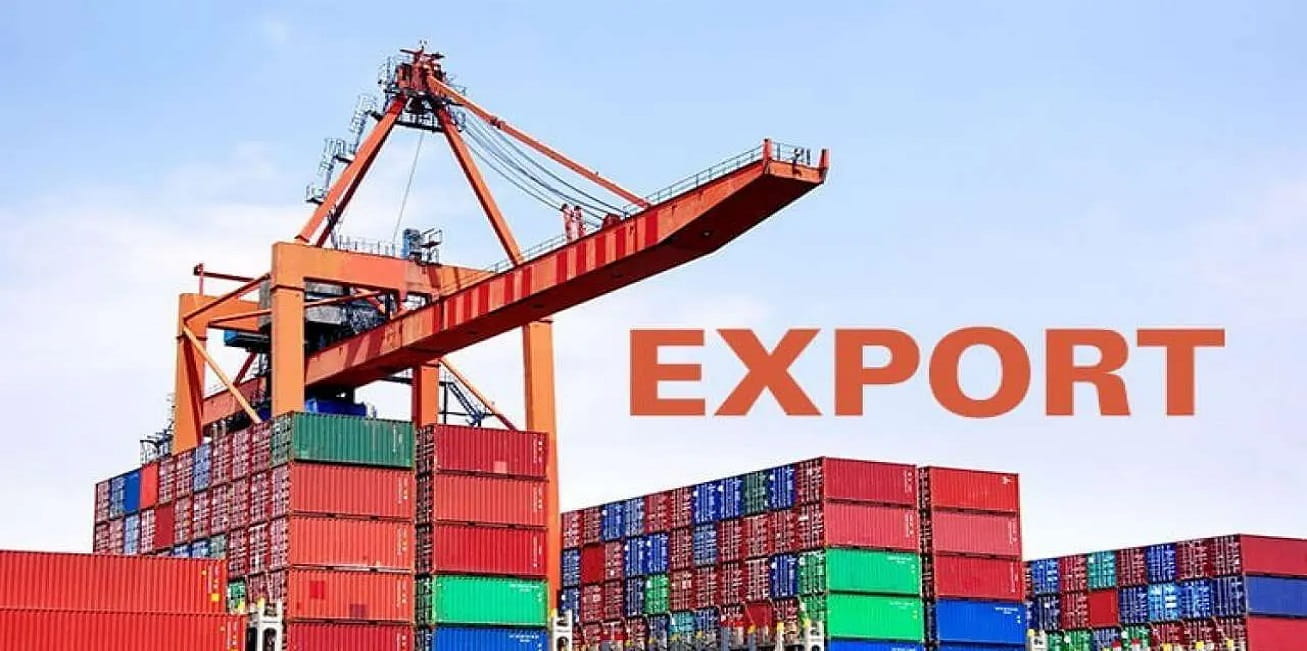
Exports in rupee term increased by 5.58 percent during the first two months of current fiscal year as compared to the corresponding period of last year, Pakistan Bureau of Statistics (PBS) reported.
Exports during July-August (2026-27) were recorded at Rs.1,526,458 million as against Rs.1,445,787 million during the corresponding period of last year showing an increase of 5.58%, according to PBS provisional data.
On year-on-year basis, the exports increased by 3.32 percent to Rs.705,892 million when compared to exports of Rs. 683,209 million during August, 2025.
Likewise, as compared to the exports of Rs.820,566 million in July, the exports in August 2026 grew by 13.97%.
The main commodities of exports during August, 2026 were knitwear (Rs. 130,691 million), readymade garments (Rs. 101,903 million), bed wear (Rs. 70,816 million), cotton cloth (Rs. 37,390 million), rice others (Rs.28,953 million), cotton yarn (Rs.26,140 million), Basmati Rice (Rs. 24,341 million), towels (Rs.23,537 million), made up Articles, excluding towels & Bedwears (Rs. 19,110 million) and meat & meat preparations (Rs. 13,087 million).
On the other hand, imports during July-August, 2026 totaled Rs. 3,546,280 million as against Rs. 3,154,176 million during the corresponding period of last year showing an increase of 12.43%. Calculators & Reference
Tools Imports into Pakistan during August, 2026 amounted to Rs. 1,625,993 million as against Rs. 1,920,287 million in July, 2026 and Rs. 1,495,210 million during August, 2025 showing a decrease of 15.33% over July, 2026 but an increase of 8.75% over August, 2025.
The main commodities of imports during August, 2026 were wears petroleum crude (Rs. 201,173 million), petroleum. products (Rs.132,941 million), electrical machinery & apparatus (Rs.85,874 ports million), palm oil (Rs.75,666 million), plastic materials (Rs.68,191 million), iron & steel scrap (Rs.55,807 million), natural gas liquified (Rs.52, 122 million), iron & steel (Rs.50,373 million), raw cotton (Rs.47,033 million) and motor cars (ckd/skd) (Rs.46,798 million).
Mr. Raheel Monis Elects Chairman of All Pakistan Shipping Association for 2026-2028
(PR)- Karachi, 17th September 2026: Mr. Raheel Monis from Karachi Gateway Terminal Limited (KGTL) has been unanimously elected as the Chairman of the All Pakistan Shipping Association (APSA) for the term 2026-2028 during the Annual General Meeting held on 17th September 2026.
The newly elected office bearers include Mr. Abid Aziz as Senior Vice Chairman and Mr. Rameez as Vice Chairman.
As a well-respected figure in the shipping industry, Mr. Raheel is committed to addressing the key challenges facing Pakistan’s shipping and ports sector, emphasizing the strategic significance of Pakistan as a gateway to Central Asia.
In his address, Mr. Raheel underscored Pakistan’s crucial role in regional trade, serving as a vital corridor for goods moving between South Asia and Central Asia.
He highlighted Pakistan’s strategic location as an essential access point for landlocked Central Asian countries, reinforcing its position as a critical hub in regional logistics and trade networks.
Mr. Raheel highlighted the significant opportunities for modernization and growth within Pakistan’s maritime sector.
He emphasized the importance of upgrading infrastructure, enhancing port efficiency, and streamlining regulatory processes to support sustainable growth.
He also stressed the value of stronger public-private partnerships and collaborative reforms to further strengthen Pakistan’s position as leading regional trade and transit hub.
Additionally, he highlighted the substantial investments APSA members have made in the shipping business, terminals, and off-dock terminals.
These investments are not only enhancing the operational capacities and efficiency of Pakistan’s maritime sector but are also pivotal in maintaining the economic stability and fostering future growth of the country.
Furthermore, it’s noteworthy that members of APSA handle over 70% of Pakistan’s sea trade, making their role indispensable in the national economy.
This significant share underscores the vital contributions of APSA members in facilitating the majority of the country’s exports and imports, thereby driving substantial economic activity.
APSA envisions transforming Pakistan into a vital gateway and a transshipment hub for the region, with enhanced sea, land, and rail connectivity.
This strategic position is expected to leverage Pakistan’s unique geographic advantage, boosting its role in international trade and regional integration.
CMA CGM Announces Rate Increase on Asia-Latin America Services, Adding USD 1,000 Per Container
CMA CGM has issued a rate bulletin announcing a uniform freight rate increase of USD 1,000 per container on services connecting Asia to multiple Latin American destinations, effective 15 October 2026.
The adjustment applies based on cargo loading date gin ports, encompassing Japan, Southeast Asia, and Bangladesh.
Destination markets include the West Coast of South America, the East Coast of South America, the West Coast of Central America, the East Coast of Central America, the Caribbean, and Mexico.
With respect to applicable cargo types, the surcharge extends uniformly across dry containers, refrigerated containers, out of gauge cargo, and freight-paid empty containers, with a standard addition of USD 1,000 per box.
CMA CGM has further noted that bunker-related surcharges, origin and destination port terminal handling charges, and security related surcharges remain subject to separate application.
For shippers and freight forwarders with cargo movements scheduled on Asia-Latin America trade lanes in the near term, the 15 October loading date represents a critical planning milestone.
Industry participants are advised to recalculate total transportation costs in advance and confirm final applicable rates directly with the carrier.
Asia-Europe container trade hits record as exports surge
Container exports from Asia to Europe rose 9.6 percent year on year to 1.93 million TEUS in July, reaching a new monthly record, according to data compiled by the Japan Maritime Center (JMC) from Container Trades Statistics (CTS).
The increase marked the ninth consecutive month of year-on- year growth.
For the first seven months of the year, Asia-Europe exports reached 12.71 million TEUS, up 12.2 percent and also a record for the January-July period.
China and Hong Kong accounted for 1.52 million TEUS of July exports, an increase of 10.2 percent.
Southeast Asia recorded 263,812 TEUs, up 18.4 percent, while exports from other parts of Northeast Asia fell 8.3 percent to 143,225 TEUS.
By destination, shipments to Northem Europe increased 10 percent to 1.21 million TEUS.
Exports to the Western Mediterranean rose 5.5 percent to 349,946 TEUs, while those to the Eastern Mediterranean increased 12.1 percent to 369,302 TEUS.
The JMC said exports from China continued to grow, supported by demand for automotive and clothing-related commodities.
The trend was weaker in the opposite direction.
European exports to Asia fell 2.4 percent year on year in July to 509,298 TEUS, marking the first decline in four months.
Despite the July contraction, European exports to Asia totalled 3.53 million TEUS in the first seven months, up 0.8 percent year on year.
Northern Europe accounted for 333,274 TEUS of July exports to Asia, down 4.1 percent.
Shipments from the Western Mediterranean: increased 6.5 percent to 87,982 TEUs, while those from the Eastern Mediterranean fell 3.9 percent to 88,042 TEUs.
By destination, exports to China declined 5.7 percent to 237,718 TEUS.
Shipments to Southeast Asia increased 5.3 percent to 161,644 TEUS, while those to other parts of Northeast Asia fell 5.4 percent to 109,927 TEUs.
OOCL Launches New China Cambodia Thailand Service (CCT4) to Strengthen Intra- Asia Connectivity
Orient Overseas Container Line (OOCL) has announced the launch of its new China Cambodia Thailand Service (CCT4).
The new service reinforces the company’s expanding network across South China, Cambodia, and Thailand, and advances its commitment to reliable regional connectivity.
Commencing on 23 October 2026, the CCT4 service establishes a direct link between four key ports: Nansha and Shekou in South China, Sihanoukville in Cambodia, and Songkhla in Thailand.
The service is designed to deliver increased capacity, greater scheduling flexibility, and competitive transit times, supporting the region’s rising trade volumes and reinforcing commercial ties between these fast-growing markets.
The (CCT4) port rotation is directly to this momentum as follows:
Nansha – Shekou – Sihanoukville – Songkhla – Nansha This looped rotation provides a consistent, repeatable schedule that connects manufacturing and consumption centers across South China and mainland Southeast Asia.
Trade between South China and Southeast Asia continues to expand, driven by shifting manufacturing patterns, regional supply chain diversification, and steady consumer demand.
The CCT4 service responds directly to this momentum by offering shippers a dependable, direct routing that reduces reliance on transshipment and helps protect delivery commitments.
For cargo owners, the direct connections at Nansha, Shekou, Sihanoukville, and Songkhla translate into more predictable transit times and improved schedule reliability – factors that support tighter inventory planning and stronger control over total landed cost.
The added capacity also gives businesses greater room to manage seasonal demand and volume fluctuations without compromising service quality.
Freight forwarders and logistics partners gain an additional, flexible routing option to structure competitive solutions for their clients across diverse industries.
The consistent weekly-style rotation supports accurate scheduling, streamlined documentation planning, and dependable service commitments across the corridor.
For importers and buyers, the direct link between South China and the ports of Sihanoukville and Songkhla offers a practical path to faster market entry and more efficient customs planning, helping reduce lead times
and support healthier cash flow.
Global Container Ship Schedule Reliability Falls for Third Consecutive Month
Global container ship schedule reliability dropped to 29% in August 2026, marking the third consecutive month of decline, according to Xeneta data.
Compared to July, reliability fell by four percentage points, while average vessel delays increased from 4.2 to 5.1 days, highlighting worsening logistics challenges.
The Far East-Europe trade lane experienced the steepest decline, with schedule reliability plummeting to just 6% in August, down ten percentage points from July.
Delays on this route now average 8.2 days, nearing disruption levels seen during the 2021 pandemic.
Other major trade lanes also suffered: Africa- routes dropped to 21%, and South America East Coast fell to 34%, with delays increasing across the board.
Multiple factors are driving this decline.
The Far East-Europe route has faced disruptions from the Red Sea crisis, rerouting via the Cape of Good Hope, and previous Suez Canal delays.
Congestion at North European ports and extended berth times for large vessels have compounded the problem.
In Asia, August saw successive typhoons that disrupted port operations, leaving 1.1 million TEU of cargo anchored at major Chinese ports like Ningbo, Shanghai, and Yantian.
Despite stable average waiting times, the number of ships at anchorage surged, putting additional strain on berth allocation and cargo handling.
These delays are cascading to European and North American ports, further reducing schedule reliability.
In August, ten of the twelve largest container shipping carriers reported declines in schedule reliability.
Maersk maintained the highest reliability at 51% but still dropped six percentage points from July.
Hapag-Lloyd fell to 46%, CMA CGM to 33%, and COSCO to 22%.
The gap between top-and bottom-performing carriers narrowed, not due to improvement among lower performers but because of worsening performance across the board.
With China’s Mid-Autumn Festival (25-27 September) and National Day holiday (1-7 October) approaching, pre-holiday cargo surges are expected to worsen delays.
Freight forwarders and shippers should closely monitor vessel delays, port conditions, and service adjustments to mitigate risks.
At 29% global schedule reliability, planning against scheduled arrival times has become increasingly unreliable, making proactive monitoring essential.